

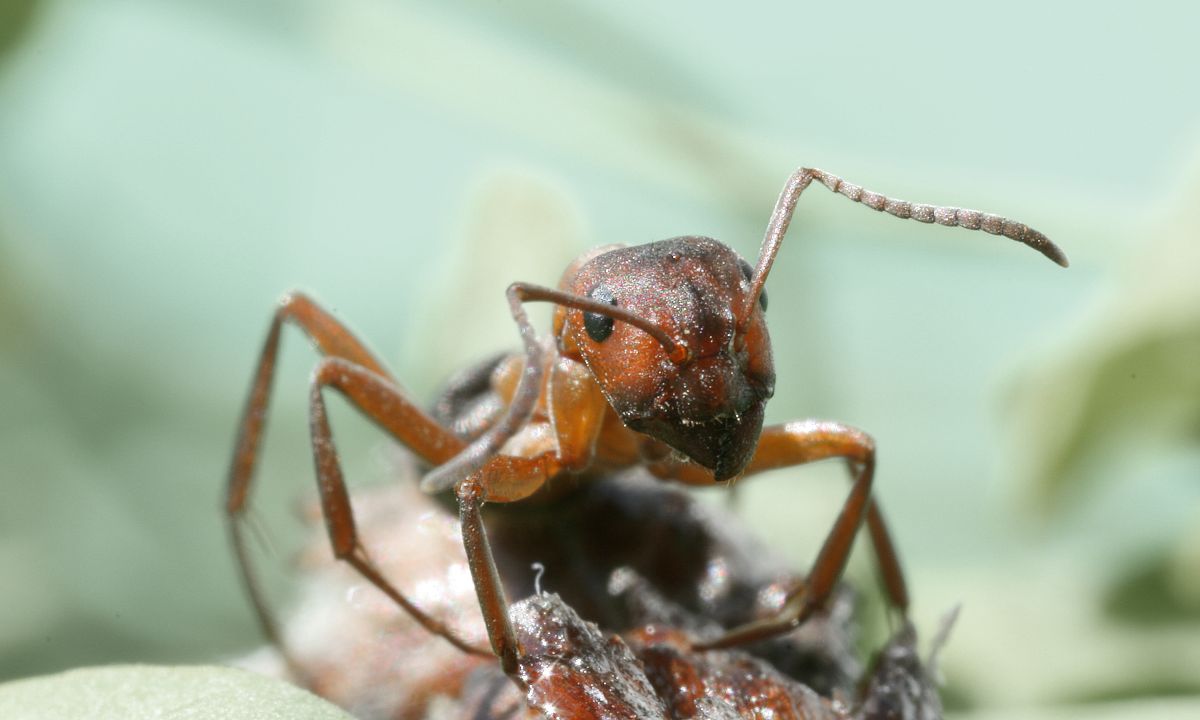
At first glance, the world of ants may seem far removed from our everyday lives. Yet, on closer inspection, they often face surprisingly similar challenges. They live in complex societies where the functioning of a colony relies on tightly organised logistical networks. These networks are structured around key resources and must be both efficient and resilient to disturbances. Wood ants (Formica lugubris) are particularly fascinating in this respect, as they operate genuine transport networks in forest ecosystems.
In our research, we investigated how these ant networks respond to disturbances. What happens when a key resource disappears from the system, and what happens when only a less important food source is lost? The results not only reveal much about the lives of ants, but also provide broader insights into how self-organising networks function in nature and even in human society.
Wood ants as engineers of forest ecosystems
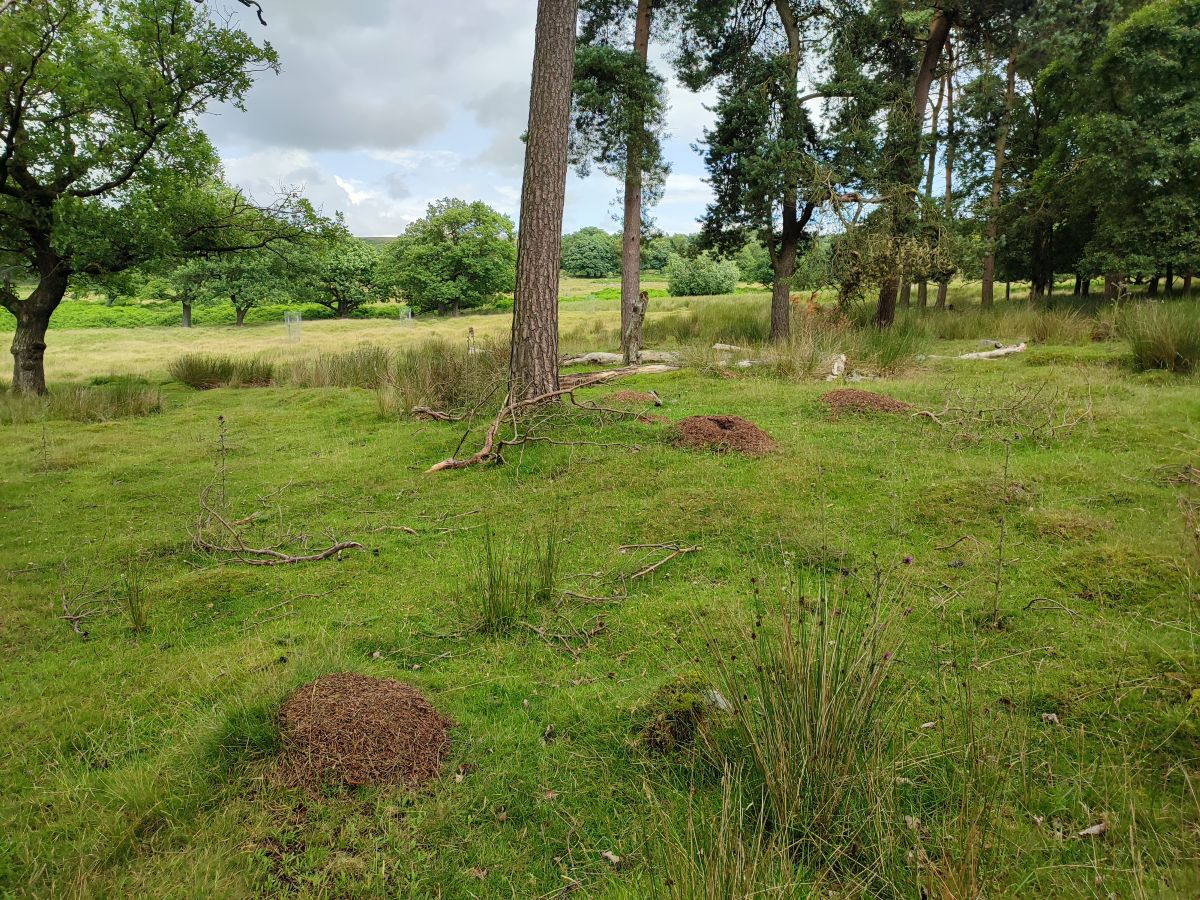
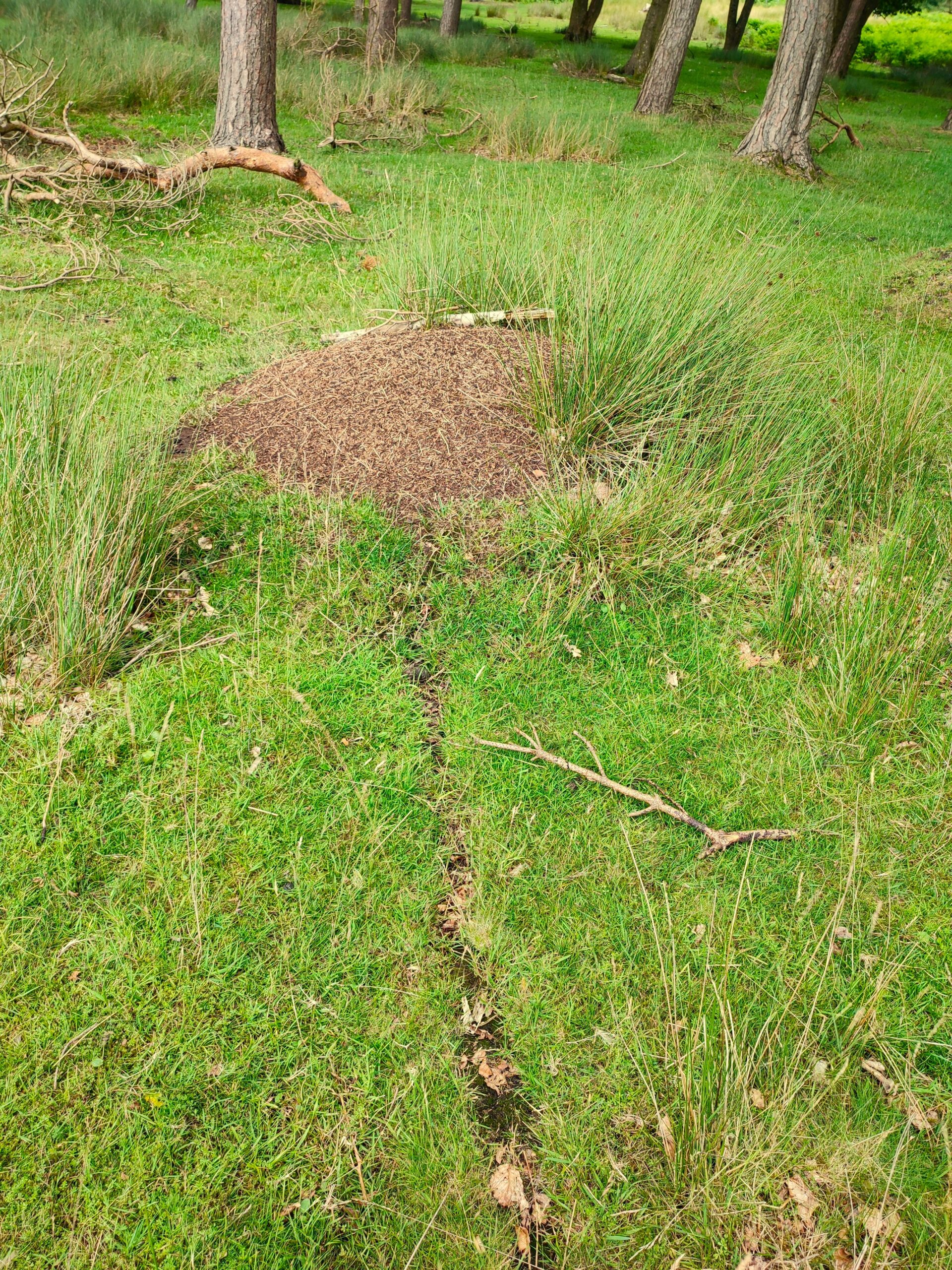
Wood ants are, in many respects, ecosystem engineers of forest habitats. Their large, dome-shaped nests are built from pine needles, twigs and other plant material, while an extensive trail system develops around them. A single nest can host millions of individuals, continuously reshaping their environment through their daily activity.
Their high-traffic trails are constantly maintained and cleared, literally cutting through the forest understorey. Through foraging, nest construction and maintenance, they move large amounts of organic material, influence soil and vegetation structure, and interact with numerous other species. It is no coincidence that wood ants are often regarded as keystone species in northern forests.
Their nests also host a wide range of other organisms. Some small insects, mites and beetles can remain almost undetected by the ants, benefiting from the protection and stable microclimate of the nest. One well-known example is the shining guest ant (Formicoxenus nitidulus), which lives exclusively inside wood ant nests and completes its entire life cycle there. A wood ant nest is therefore not just a simple structure, but a distinct habitat in its own right.
Multiple queens, multiple nests, one colony
Many people imagine an ant colony as a single nest ruled by a single queen. In wood ants, however, the situation can be far more complex. Colonies of Formica lugubris may contain multiple queens and multiple nests.
One classical way of founding a new colony involves a young queen taking over the nest of another ant species. Over time, her offspring replace the original inhabitants, and the nest becomes a wood ant colony. However, this is not the only pathway.
Wood ants often expand through a process known as budding, where a queen leaves the original nest accompanied by workers and establishes a new nest nearby. These new nests do not necessarily become independent. The ants still recognise each other as nestmates, and cooperation between nests can persist.
With repeated budding, large polydomous colonies can form. From the outside, these appear as separate nests, but they function as a single social unit. Ants can move freely between nests, exchange resources, and collectively exploit their environment.
Colonies as logistical networks
In North Yorkshire, the study system of our research, wood ants predominantly form such multi-nest systems. These colonies create extensive networks where not only nests but also food-providing trees play a crucial role.
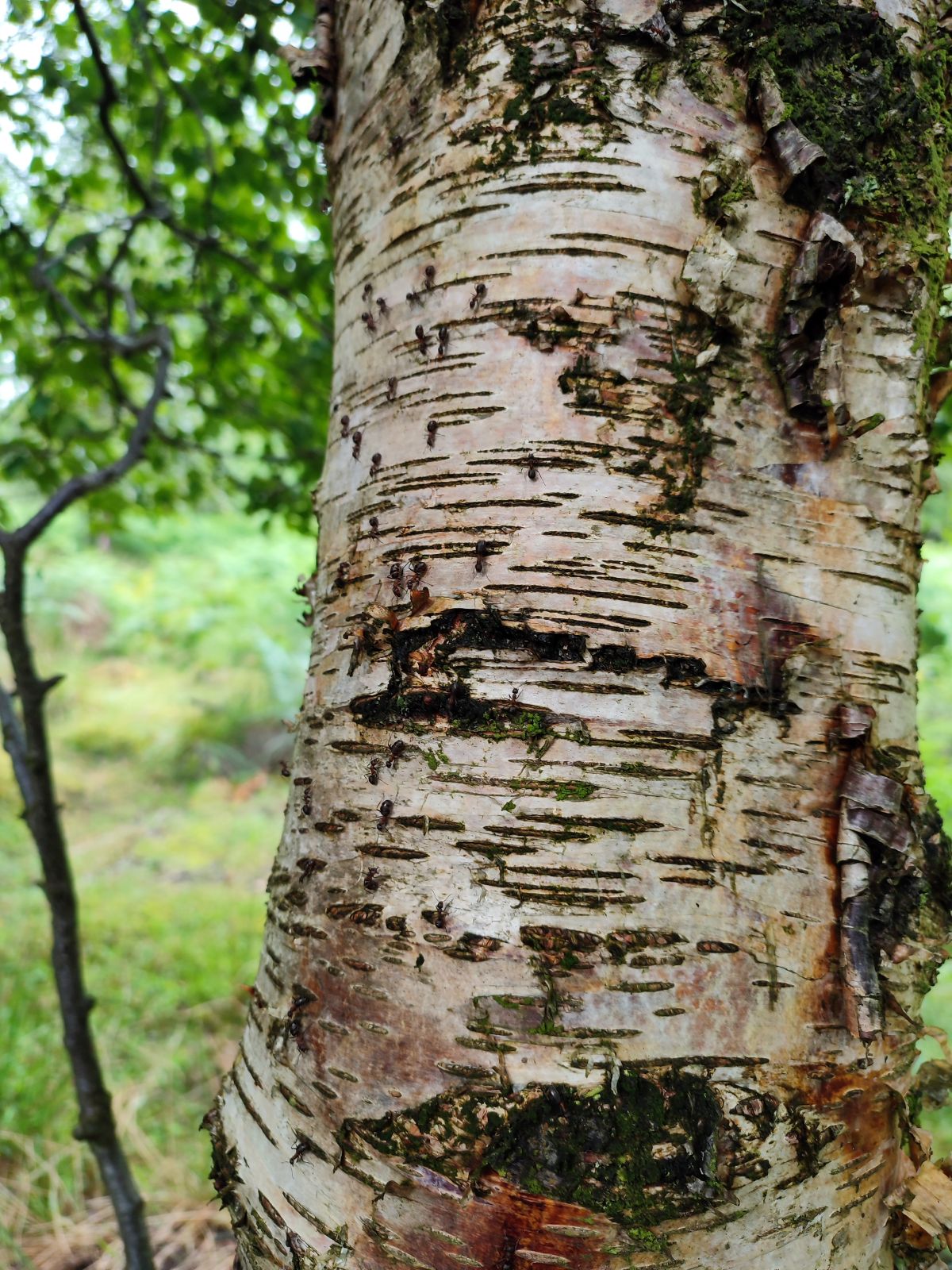
A key component of their diet is honeydew, a sugary substance excreted by aphids feeding on tree sap. Ants protect these aphids and, in return, collect honeydew as a vital energy source.
As a result, the network consists of two types of nodes: nests and trees. These are connected by trails that are often clearly visible. Along trails leading to trees, workers transport food back to the nests. Trails between nests are equally important, as they facilitate the movement of food, brood and workers, forming a complex logistical system.
This inter-nest traffic allows for partial specialisation among nests. Nests close to productive trees may act as distribution centres, while others may be better suited for brood development. This organisation increases efficiency but also raises an important question: how vulnerable is such a network?
What happens when a key tree is lost?
The central question of our study was how these networks respond to disturbances, such as the loss of a food source, for example a tree. Not all resources are equally important. Some trees are heavily used, while others play a more minor role.
The critical issue is therefore not only whether a disturbance occurs, but which part of the network it affects. Because the system is interconnected, the loss of a single resource does not remain local: it can influence the entire network. The removal of a minor element may have limited consequences, whereas the loss of a highly connected node can reorganise the whole system.
We addressed this question using a combination of long-term field observations, experimental studies and dynamic simulation models built on ten years of empirical data. In our simulations, the network was not treated as static, but as a constantly changing system, where nests grow or disappear, connections form or dissolve, and ants adapt their routes to changing conditions.
We tested disturbances of different strengths. We examined what happens when a weakly used tree is lost, when nodes fail randomly, and when the most heavily used resource disappears. We also explored whether it matters if the disturbance is temporary or permanent.
Strong disturbances can reshape the entire network
Our results showed that the impact of disturbance strongly depends on which element is affected. When a less important or randomly chosen food source was removed, the network could often adapt relatively well. In some cases, short-term efficiency even improved, as the removal of weak connections simplified the system.
In contrast, when the most important food source was lost, network efficiency declined persistently. The system did not collapse, but it reorganised into a less efficient configuration. Moreover, its robustness was reduced, making it more vulnerable to future disturbances.
Interestingly, the network did not fully return to its original state even when the resource later became available again. This suggests that recovery in self-organising systems is not simply a matter of restoring what was lost. Once a network shifts to a new configuration, returning to the previous optimal structure may require substantial reorganisation.
While a polydomous lifestyle offers advantages such as efficient resource acquisition and flexible space use, our results highlight an important trade-off. If a network is strongly organised around a few key resources, their loss can have disproportionate consequences.
What can we learn from ant networks?
Wood ant networks are not unique in their underlying principles. Similar transport systems occur across biological scales. Within cells, molecules and organelles move along structured pathways. In the circulatory system, blood vessels must ensure reliable supply even under stress. Fungal networks also distribute resources efficiently while balancing cost and resilience.
At larger scales, the same challenges arise in human systems. Transport networks, energy grids and global supply chains must move resources between many sources and destinations while remaining robust to disruption. These systems often develop through self-organisation and grow increasingly complex, which can increase efficiency but also dependence on key nodes.
Recent events, including pandemics, conflicts and extreme weather, have demonstrated how vulnerable such systems can be when critical points fail. Studying ants therefore offers more than natural history insight. It helps us understand what makes networks truly resilient.
The key lesson is that resilience is not only about having many connections. It is equally important to identify and protect the critical elements around which systems are organised. Wood ants provide a natural model system that allows us to explore these questions in a tractable and insightful way.
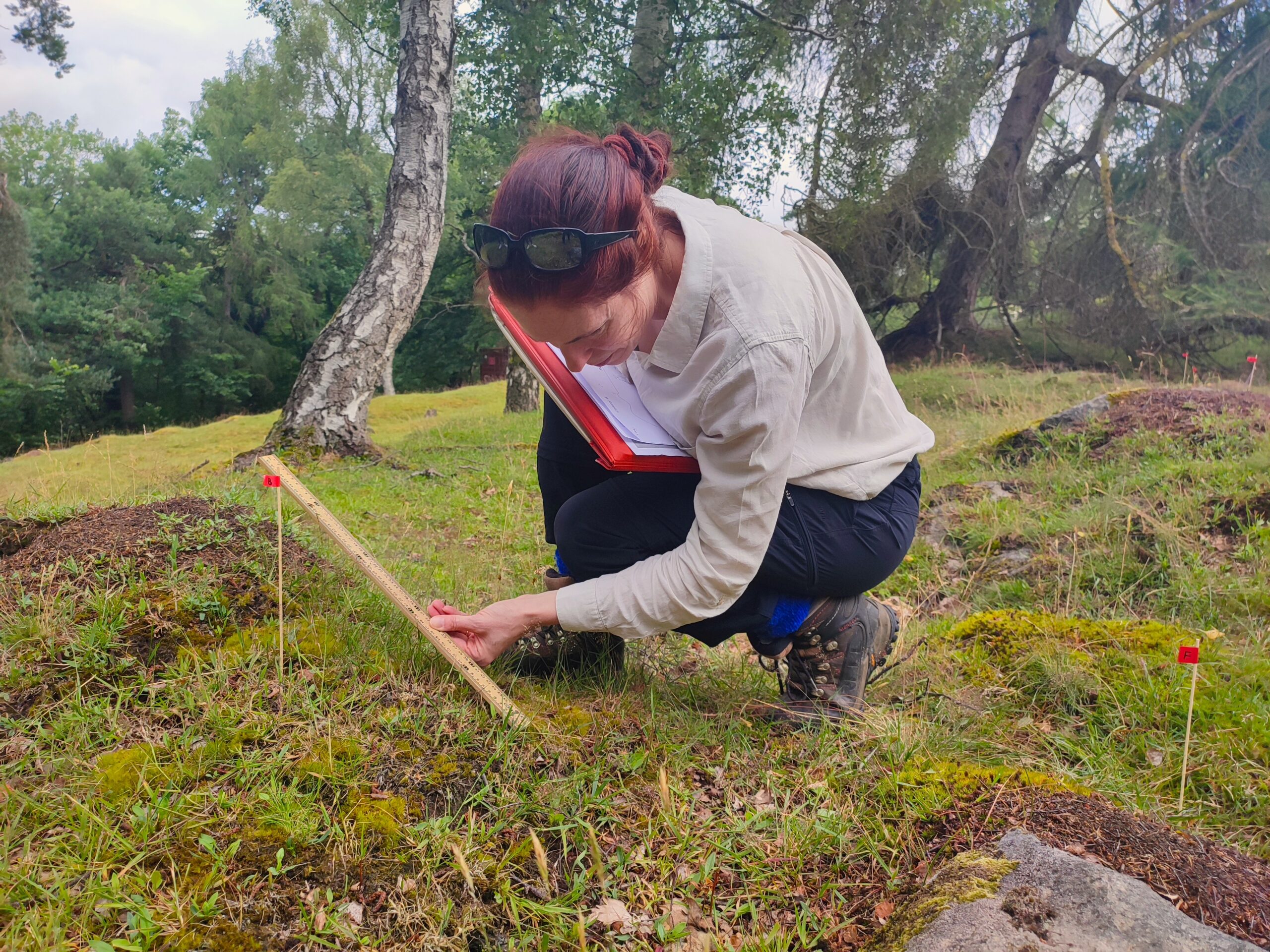
Research background
Imre Sándor Piross, research fellow at the HUN-REN Centre for Ecological Research, joined a collaborative project on ant networks between Harvey Mudd College (USA) and the University of York as a postdoctoral researcher, where he spent one year.
“I was particularly impressed by the team’s approach of addressing the same research questions using multiple methods, combining field observations, experiments and computer simulations. Together, these provide a much deeper understanding of the system.”
This work was funded by NSF award IOS 1755425: Dynamic ant networks: How environmental constraints and ecological context shape resource transport systems.
The results of the study were published in Proceedings B of the Royal Society (the UK’s national academy of sciences). The article is freely available at: