

As climate change intensifies, one of the key challenges facing forestry is how to balance efficient timber production with the preservation of forests’ climate-regulating functions, biodiversity and resilience. The growing public demand for recreation in forests, together with increasing opposition to clear-cutting, is also driving the search for more sustainable management approaches.
A recently spreading forest management system, the so called continuous-cover forestry may provide a viable alternative to conventional rotation forestry systems. By mimicking natural forest dynamics, this approach creates only small-scale disturbances in the canopy through selective thinning or the opening of gaps measuring a few hundred square meters. As a result, the forest habitat remains continuously intact, helping preserve the cool, humid microclimate and the associated forest biodiversity.
In oak-dominated forests, however, management based on fine-scale interventions raises several practical questions. Oaks are light-demanding tree species: they regenerate poorly under a closed canopy, yet in overly large canopy openings they may be rapidly outcompeted by faster-growing woody and herbaceous species that suppress young oak seedlings. Therefore, a new study by researchers from the Forest Ecology Research Group at the HUN-REN Centre for Ecological Research investigated which canopy gap sizes and shapes most effectively support natural oak regeneration while maintaining continuous forest cover.
“Foresters have relied on conventional rotation forestry systems for decades, so transitioning to a fundamentally different management philosophy is not easy,” says Flóra Tinya, research fellow at the Forest Ecology Research Group and first author of the study. “To encourage the wider adoption of ecologically gentler forestry practices, we need to provide scientifically grounded knowledge that can help practitioners develop and refine new management techniques.”
The research was conducted in collaboration with forestry professionals from Pilis Park Forestry Company. Péter Csépányi, Deputy CEO responsible for forestry and nature conservation at the company, has accumulated decades of practical experience in regenerating oak stands under continuous forest cover. “This collaboration allowed us to align the research questions closely with the practical challenges encountered in forest management,” Tinya adds.
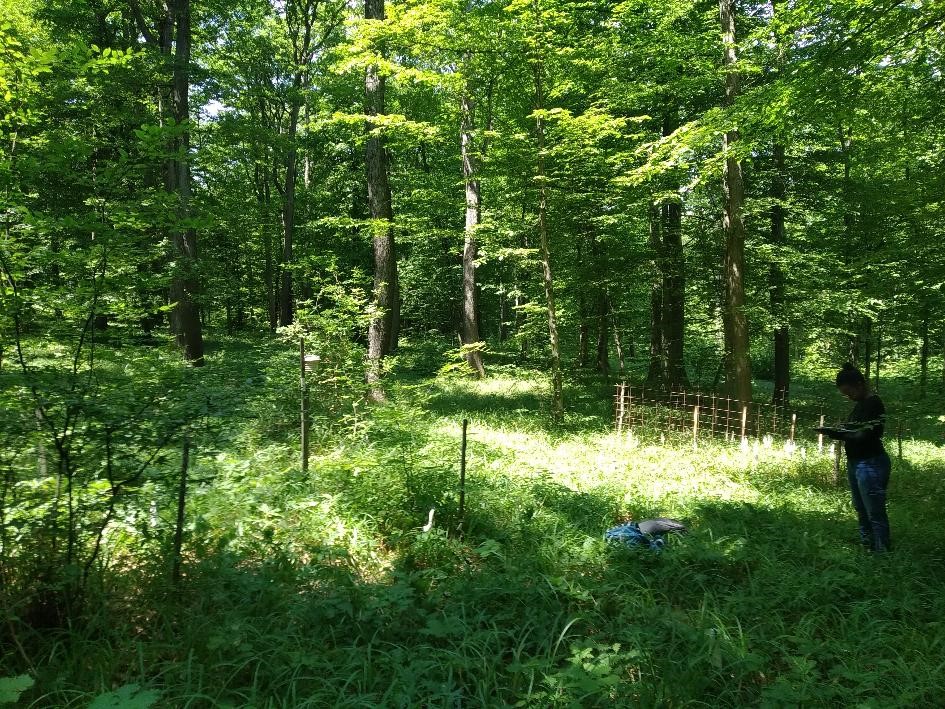
The study formed part of the Pilis Gap Experiment, conducted in a sessile oak–hornbeam forest in the Pilis Mountains of Hungary. Researchers examined the effects of two different gap sizes and two different gap shapes — circular and elongated. Previous studies by the team had already demonstrated that gap size and shape strongly influence microclimatic conditions and the development of understory vegetation. In the newly published work, the researchers analyzed how sessile oak (Quercus petraea) saplings responded to the resulting light and soil-moisture conditions, and how competition from other plant species affected their development.
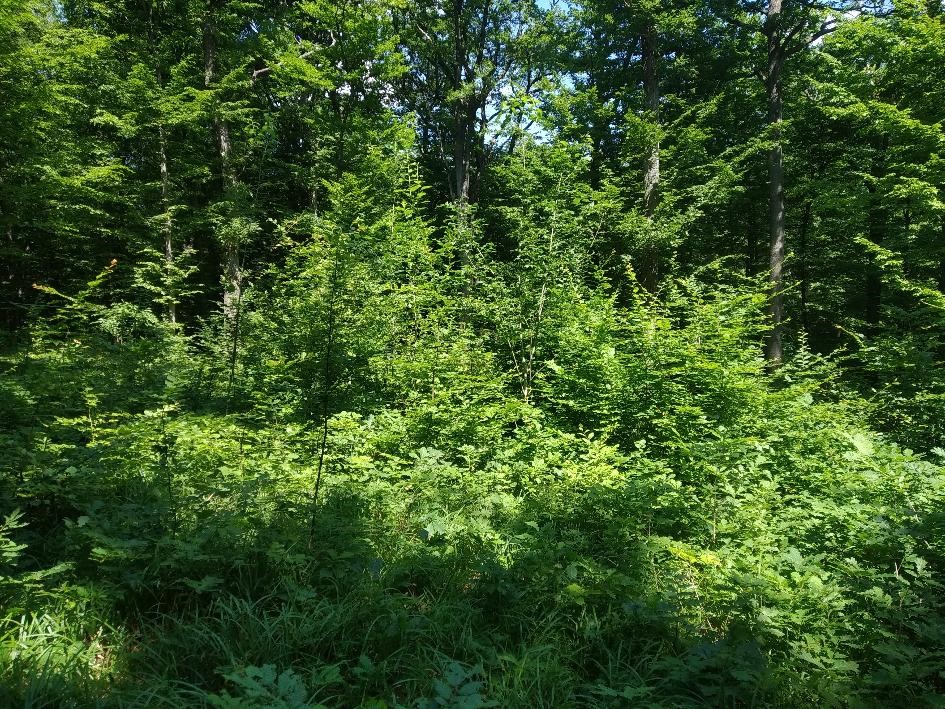
The researchers found that oak regeneration could be initiated in all investigated gap types, but sapling performance and the amount of required tending effort differed considerably among them.
Initially, the most favorable light and soil-moisture conditions occurred in large circular gaps, where tended oak saplings — those released from competing vegetation — showed the fastest growth. However, these improved environmental conditions also favored competing species. Hornbeam (Carpinus betulus), dogwood (Cornus sanguinea) and bramble (Rubus fruticosus agg.) expanded vigorously in these gaps and increasingly suppressed the developing oak saplings over time. Within a few years, the dense vegetation substantially reduced the initial surplus of light and moisture in the gaps. As a consequence, successful oak regeneration in circular gaps required intensive control of competing vegetation.
The researchers found that elongated canopy gaps may provide a better compromise between suitable environmental conditions for oak seedlings and the amount of maintenance work required. Light availability in elongated gaps was similar to that of circular gaps with the same area, but the increase in soil moisture was more moderate, limiting the spread of competitive species.
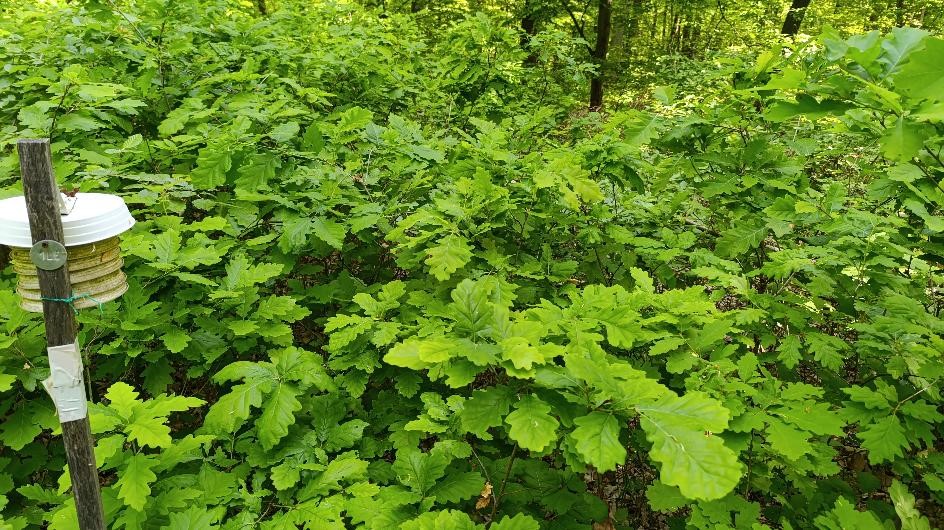
“Gap size also matters,” says Tinya. “Among the elongated gaps, the smaller ones had lower competition because of the more moderate light conditions, meaning they required the least maintenance.” Although oak seedlings also grew more slowly in the small, elongated gaps, the researchers argue that this slower initial growth is of limited practical importance given the long lifespan of oak trees. “When these trees are typically harvested only after more than a hundred years, somewhat slower growth during the first few years is not particularly significant,” Tinya explains.
At the same time, the study also showed that after several years the small, elongated gaps no longer fully satisfied the increasing light demand of the growing oaks. According to the researchers, the gaps may therefore need to be enlarged after five to six years. They hypothesize that by then the saplings will already be sufficiently established to compete more successfully with other species — a prediction they plan to test in future research.
Small, elongated gaps may offer an additional advantage as well: acorns from surrounding mature oak trees can more easily reach the center of these gaps, enabling the establishment of new seedlings over multiple years.
The findings demonstrate that with appropriately designed canopy gaps, oak forest regeneration can be achieved while continuously maintaining forest cover. The researchers provide detailed recommendations to support successful implementation, contributing to the broader adoption of forestry practices that help preserve forest microclimates and biodiversity while also enhancing forests’ resilience to climate change.
At the same time, the authors emphasize that the long-term goal is unlikely to be the maintenance of nearly pure oak stands typical of conventional rotation forestry systems. Instead, they argue that more diverse mixed-species forests may ultimately provide greater ecological and economic stability.
Research:
Tinya, F., Csépányi, P., Gitau, M. G., Horváth, Cs. V., Kovács, B., Németh, Cs., Ódor, P. (2026): Elongated gaps provide a good compromise between abiotic and
competitive conditions for sessile oak regeneration. Forest Ecosystems, 16: 100472. https://doi.org/10.1016/j.fecs.2026.100472
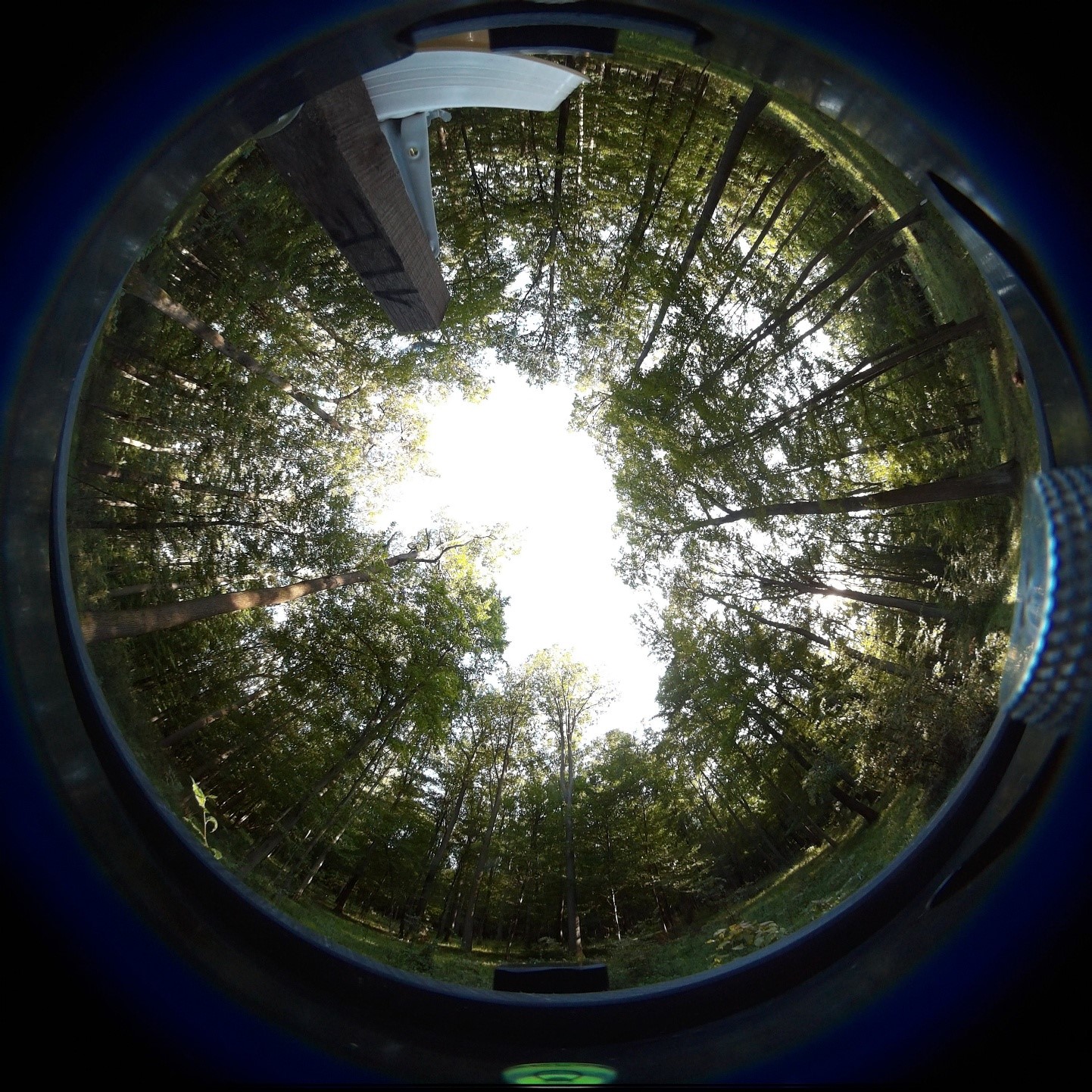
Main photo: Hemispherical canopy photograph of a large, elongated gap. Researchers use such images to calculate the amount of incident light reaching the forest floor.