

bool(true)
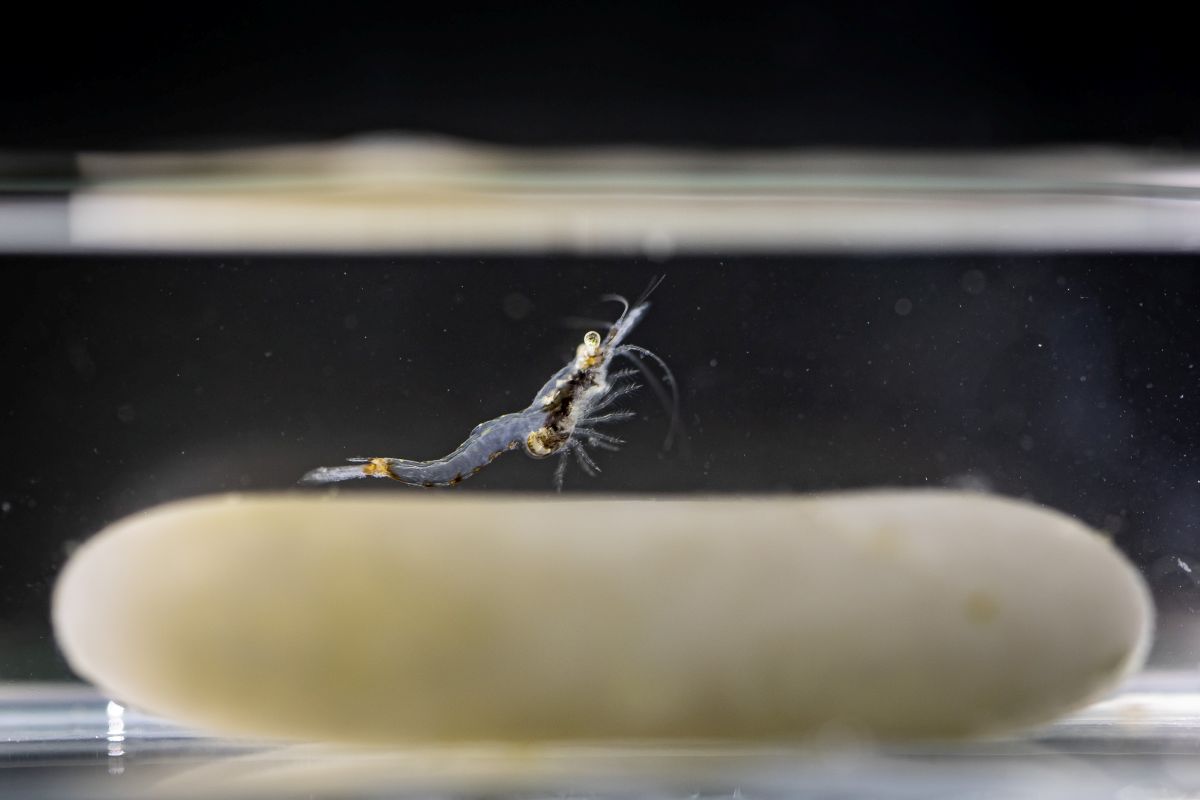
A new study led by researchers at HUN-REN Centre for Ecological Research in an international collaboration with Queen Mary University of London shows that rising water temperatures can shift the diet of an invasive crustacean from animal prey toward algae, a finding with wide implications for how invasive species reshape freshwater food webs under climate change. The research, published in Limnology and Oceanography Letters, found that warming causes a reallocation of diet from carnivory toward herbivory instead of simply increasing feeding intensity, particularly when larger zooplankton prey are available.
Climate change is not only warming our lakes and rivers, it is also changing what invasive species eat. A new experimental study published in Limnology and Oceanography Letters shows that temperature-driven diet shifts in an invasive crustacean could alter its ecological role in freshwater food webs.
The study used Limnomysis benedeni, a Ponto-Caspian mysid that has successfully invaded freshwater ecosystems across Central Europe and can reach high population densities. As an omnivore, capable of consuming both microscopic algae (phytoplankton) and animal prey (zooplankton), this species plays a flexible and potentially influential role in aquatic food webs. Yet, how climate warming might alter that role has remained poorly understood.
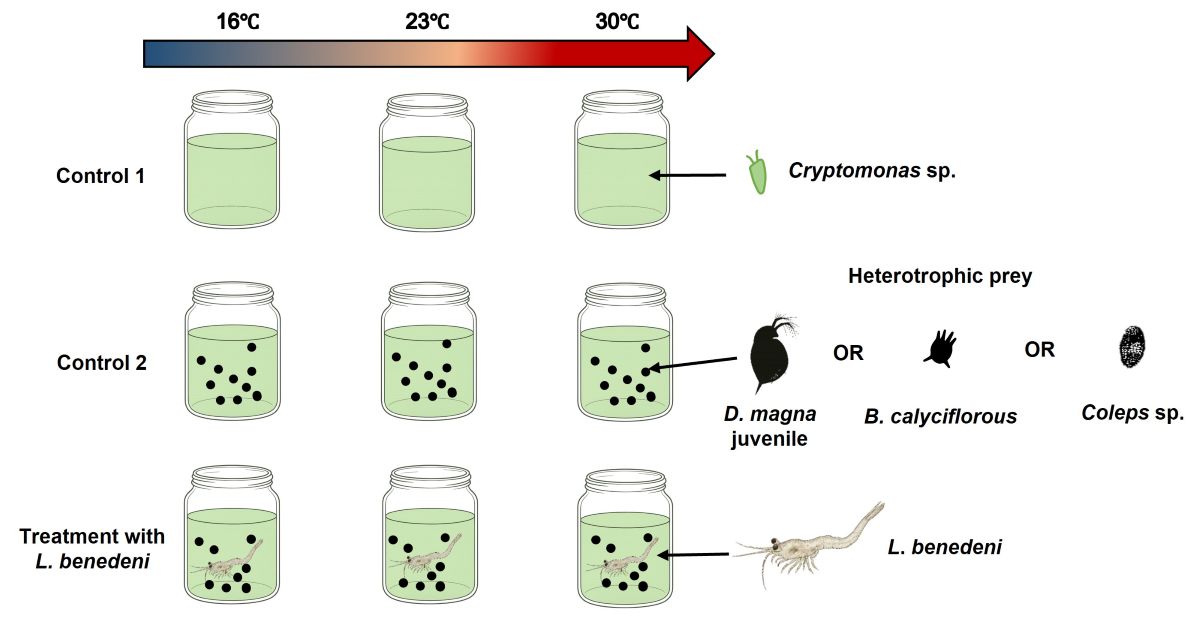
Researchers conducted laboratory feeding experiments in which mysids were offered combinations of autotrophic prey (the microalga Cryptomonas sp.) and heterotrophic prey of different body sizes: the ciliate Coleps sp., the rotifer Brachionus calyciflorus, and juveniles of the cladoceran Daphnia magna. The experiment was done across three temperatures representing typical and episodically high growing-season conditions (16°C, 23°C, and 30°C) in regional shallow lakes.
Key findings:
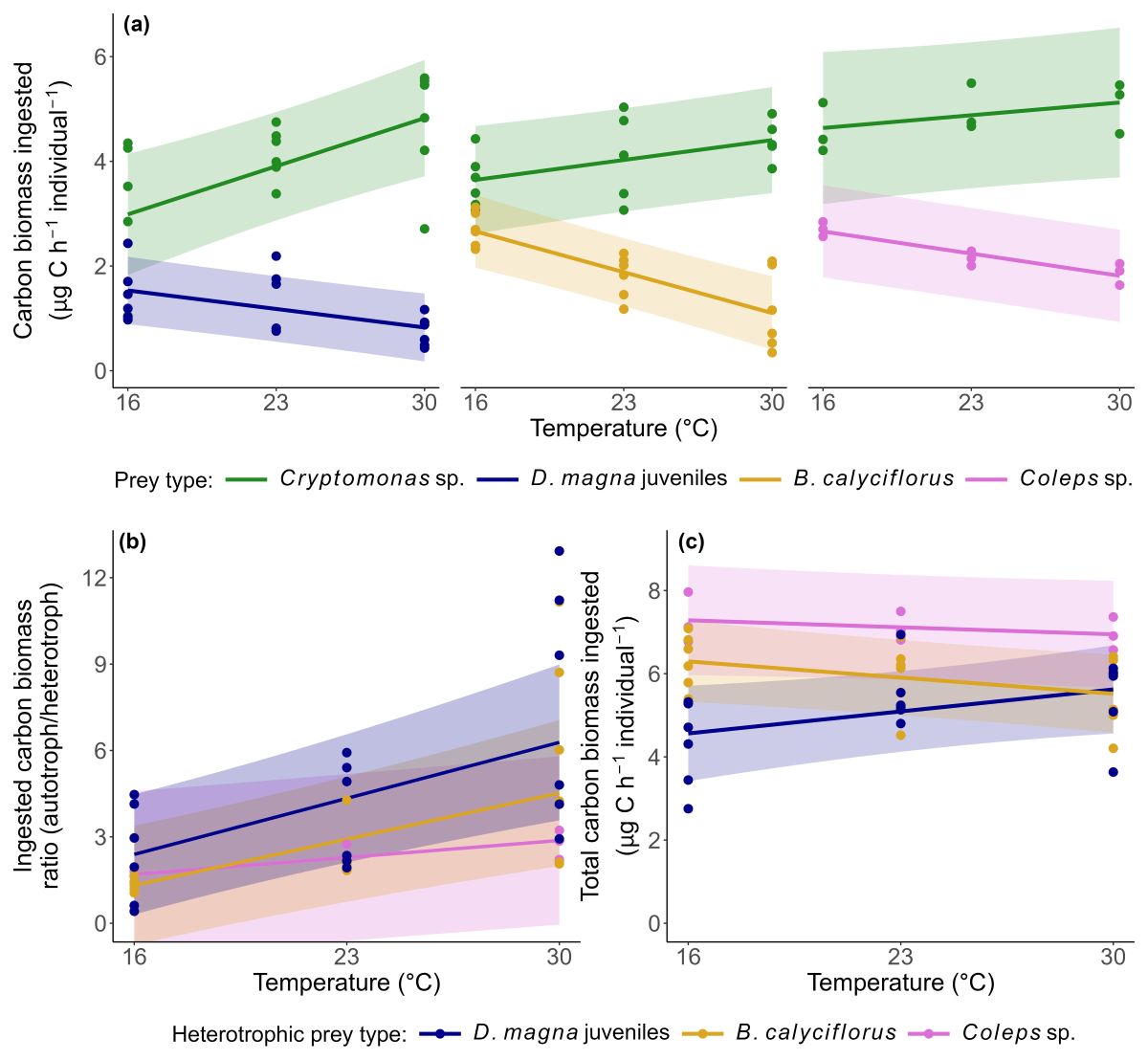
- As temperature increased, the ratio of algal to animal food consumption increased consistently, showing a clear shift toward herbivory.
- The shift was driven by reduced consumption of animal prey, and by an additionally increased algal ingestion when larger zooplankton (Daphnia magna and Brachionus calyciflorus) were present.
- Total carbon ingestion did not consistently increase with warming, indicating that warming caused a diet reallocation rather than raising the overall feeding.
- The magnitude of the diet shift was stronger with larger zooplankton prey, consistent with greater capture and handling costs at higher temperatures.
“These results suggest that warming can change the trophic role of invasive consumers, potentially shifting them from predators to competitors of their intraguild prey. This may have cascading implications for community dynamics and ecosystem functioning.”- said lead author Varsha Rani.

The findings are relevant beyond this single species. Many aquatic invasive species are omnivores, and understanding how their feeding strategies vary with warming is essential for predicting ecological impacts under future climate scenarios. The authors note that temperature-dependent trophic plasticity could also drive seasonal variation in feeding strategies in natural ecosystems, and as heatwaves and warmer winters become more frequent, the seasonal footprint of such invasive omnivores on plankton communities may intensify.
A major novelty of this study is that temperature-dependent diet shifts were tested by using multiple live prey combinations, providing a realistic representation of natural food web interactions.
Publication:
The study was conducted at the Institute of Aquatic Ecology, HUN-REN Centre for Ecological Research, Budapest, Hungary. The research team includes Varsha Rani, Csaba F. Vad, Zsófia Horváth, Károly Pálffy, Péter Borza, and Pavel Kratina.