

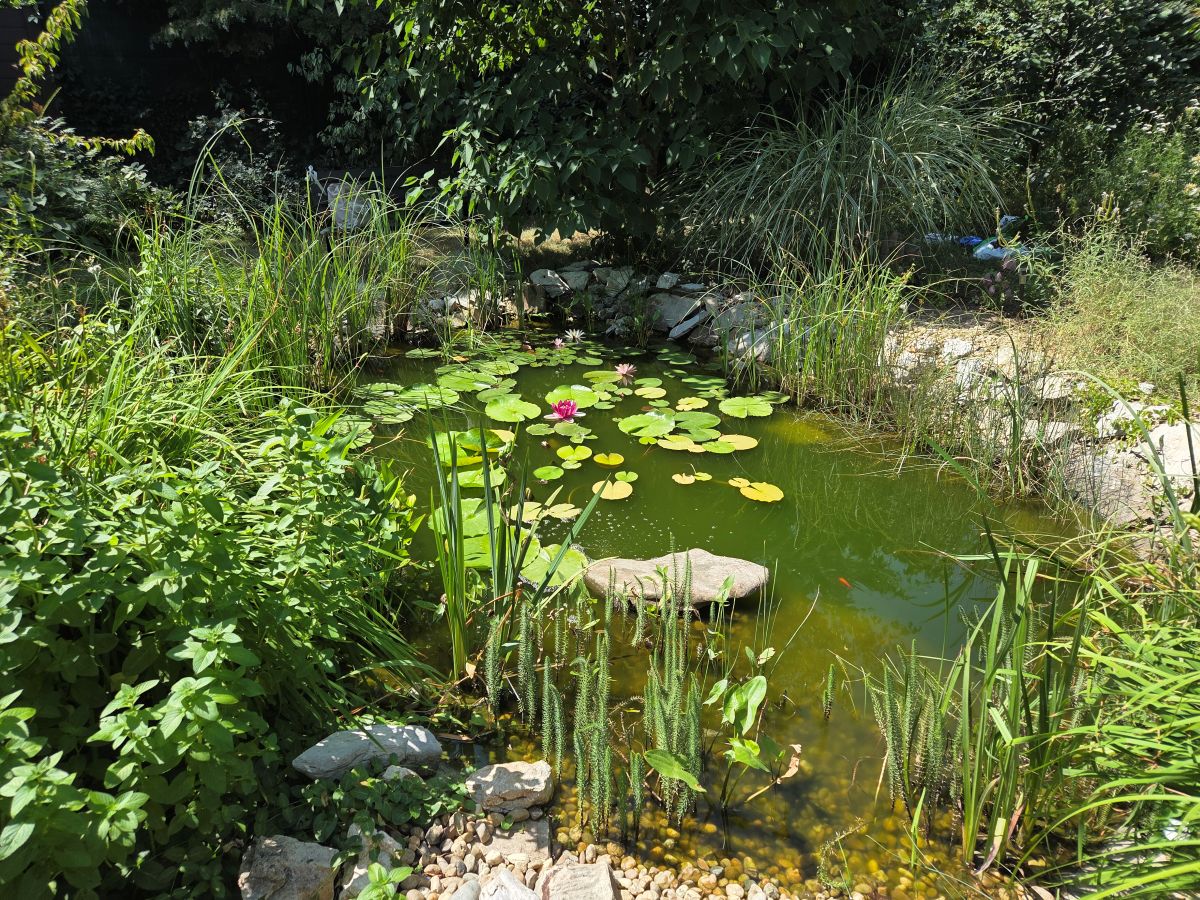
As cities grow, artificial water bodies are slowly replacing natural ones. Among the most numerous but least studied are the garden ponds, which can be found by the millions in private gardens. A new study from researchers at the HUN-REN Centre for Ecological Research provides the first systematic look at zooplankton communities living in these garden ponds and finds that even the smallest of them contribute to urban freshwater biodiversity, adding to what the larger public urban ponds already provide.
Zooplankton (rotifers, cladocerans, and copepods that drift in the water column) are “ecological workhorses” and play a key link in the aquatic food web. Zooplankton transfer energy from primary producers to fish and invertebrate predators, and their grazing can regulate algal blooms. Yet while public urban ponds have drawn growing scientific attention, the life inside privately managed garden ponds has remained poorly studied.
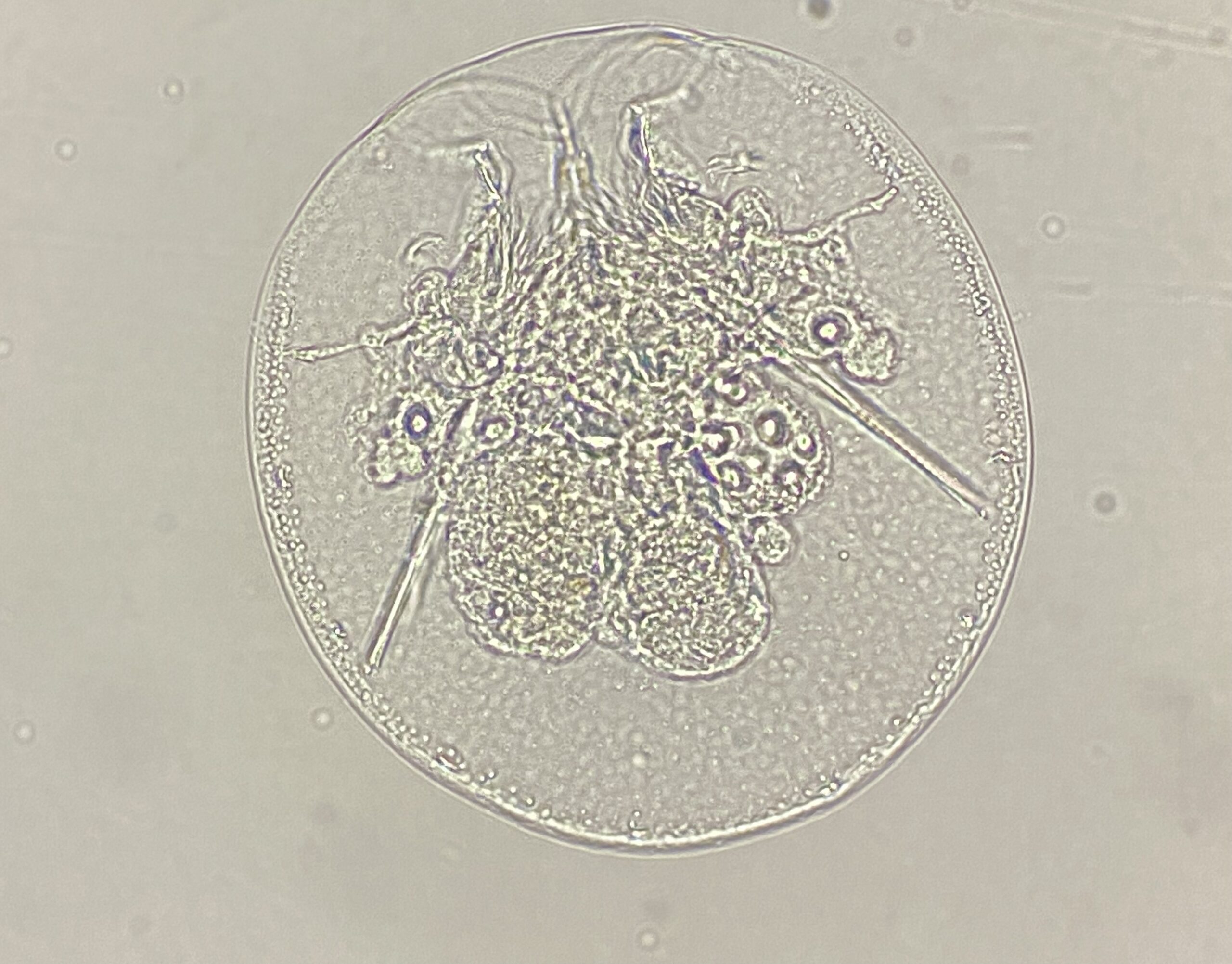
To close that gap, the team sampled 90 ponds in and around Budapest, including 38 private garden ponds and 52 public urban ponds during spring 2022, through the MyPond citizen science project. They identified and documented every zooplankton species present, compared the density and species richness between the two pond types, and tested how communities responded to urban cover and fish presence.
Key findings
- Across all 90 ponds, the team recorded 95 zooplankton species, including two rotifers new to Hungary (Lecane tudicolaand Monommata arndti), found in both garden and urban ponds, and three non-native species found only in urban ponds.
- More than half of all zooplankton species (58%) were shared between the two pond types.
- In urban ponds, urban cover decreased crustacean density and increased rotifer density, while garden pond communities were largely unaffected, likely buffered by the private greenery around them.
- Fish were the strongest driver of community composition in both pond types, with their effect being stronger in garden ponds, whose small size offers zooplankton fewer places to hide from predators.
“Garden ponds are easy to dismiss as too small or too artificial to matter, but our results show they contribute meaningfully to urban biodiversity,” said lead author Thu-Hương Huỳnh. “Although they support fewer crustacean species than larger public ponds, they still share much of the regional zooplankton diversity. We also see clearly that fish are the real force reshaping these communities. This effect is strongest in the smaller garden ponds, where the zooplankton have so few places to hide that fish can restructure the entire community.”
“A small garden pond may look like little more than a decorative water feature. Because many of these ponds are stocked with ornamental fish, most people would not expect them to harbour much microscopic life,” said project leader Zsófia Horváth. “Yet beneath the surface, we found an overlooked community of microscopic animals. Although ornamental fish strongly shape these communities, we still discovered two rotifer species never before recorded in Hungary, showing that even tiny urban ponds can reveal surprising biodiversity.”
A key novelty is that this is the first systematic study of zooplankton in private garden ponds, a habitat so understudied, with two rotifer species never before recorded in Hungary. Additionally, their communities are less affected by urbanisation. That makes garden ponds valuable for urban biodiversity despite their small size.
The study was conducted at the Institute of Aquatic Ecology, HUN-REN Centre for Ecological Research, Budapest, Hungary. The research team includes Thu-Hương Huỳnh, Csaba F. Vad, Barbara Barta, Beáta Szabó, Bence Buttyán, Andrew J. Hamer, Irene Tornero, Zsuzsanna Márton, Márton Uhrin, and Zsófia Horváth.
Publication:
Huỳnh, T.-H., Vad, C.F., Barta, B., Szabó, B., Buttyán, B., Hamer, A.J., Tornero, I., Márton, Z., Uhrin, M. and Horváth, Z. (2026), Zooplankton communities and their responses to fish presence and urban cover across garden and other urban ponds. Limnol Oceanogr, 71: e70464. https://doi.org/10.1002/lno.70464
Main photo: Garden ponds are a common feature of residential gardens in and around Budapest. Despite their small size, they can support surprisingly diverse aquatic communities. Photo: My Pond Team (https://mypond.hu/summary/)