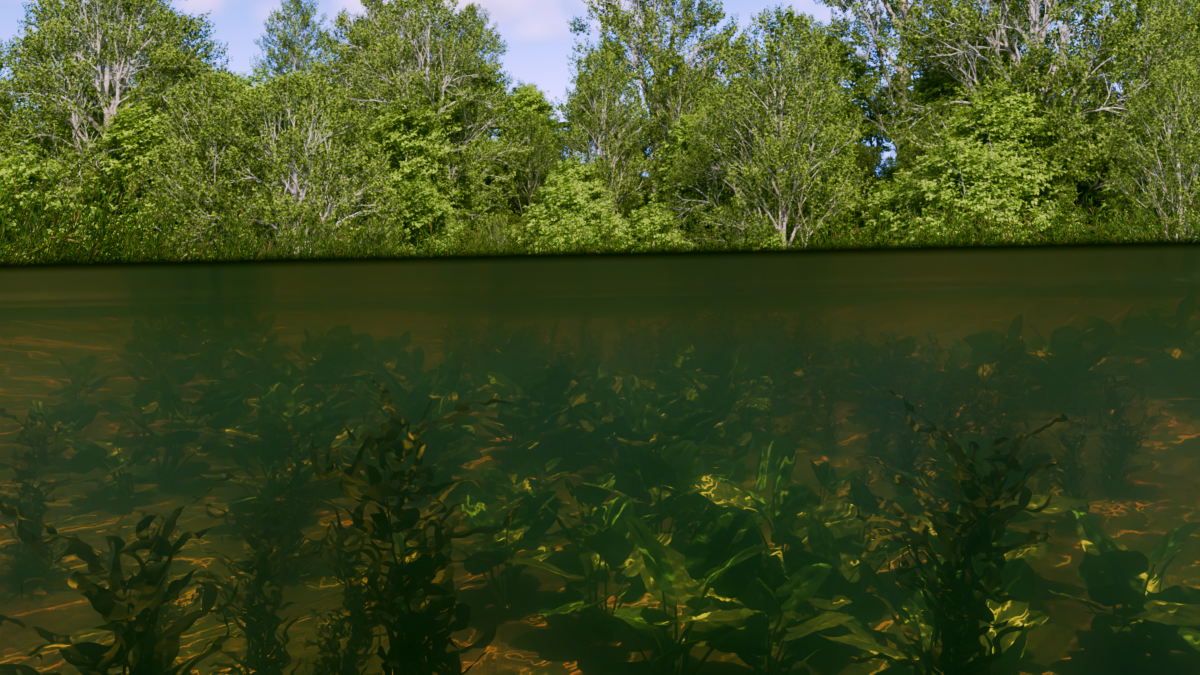

A whole world is hidden in a single drop of water.
Discover a world that has always been there – only now, we can see it in a new way.
LIFE IN A DROP – WATCH THE FILM
Life in a Drop is a science communication film that takes viewers into the invisible world of lake life. Over the course of a full year, it follows the transformation of plankton communities: from the winter world beneath the ice, through the changes of spring and the algal blooms of summer, to autumn and the return of winter.
The Story of an Invisible World
Beneath the surface of a lake lies a world in constant change.
Microscopic algae, bacteria, unicellular organisms and tiny animals make up the plankton community. They feed and become food themselves, adapt to changes in their environment, defend themselves against grazers, reproduce and enter dormant stages – all while shaping the ecological processes taking place within the lake.
The film follows this ever-changing microscopic world through the seasons. It reveals how plankton communities transform, how the different members of the food web interact, how summer algal blooms develop, and what happens when they collapse.
A Year in the Life of a Lake
Winter – Life Beneath the Ice
The snow- and ice-covered surface of the lake may appear almost lifeless, yet beneath it lives a remarkable community.
Among the algae adapted to low light levels and cold temperatures are chrysophytes and armoured dinoflagellates. Some species do more than photosynthesise: they can also engulf bacteria, an important survival strategy in the dim winter environment.
Spring – New Players Arrive
The ice melts, sunlight grows stronger and the waters of the lake begin to mix. Nutrients are carried into the well-lit upper layers, creating favourable conditions for rapid growth among diatoms, green algae and other planktonic organisms.
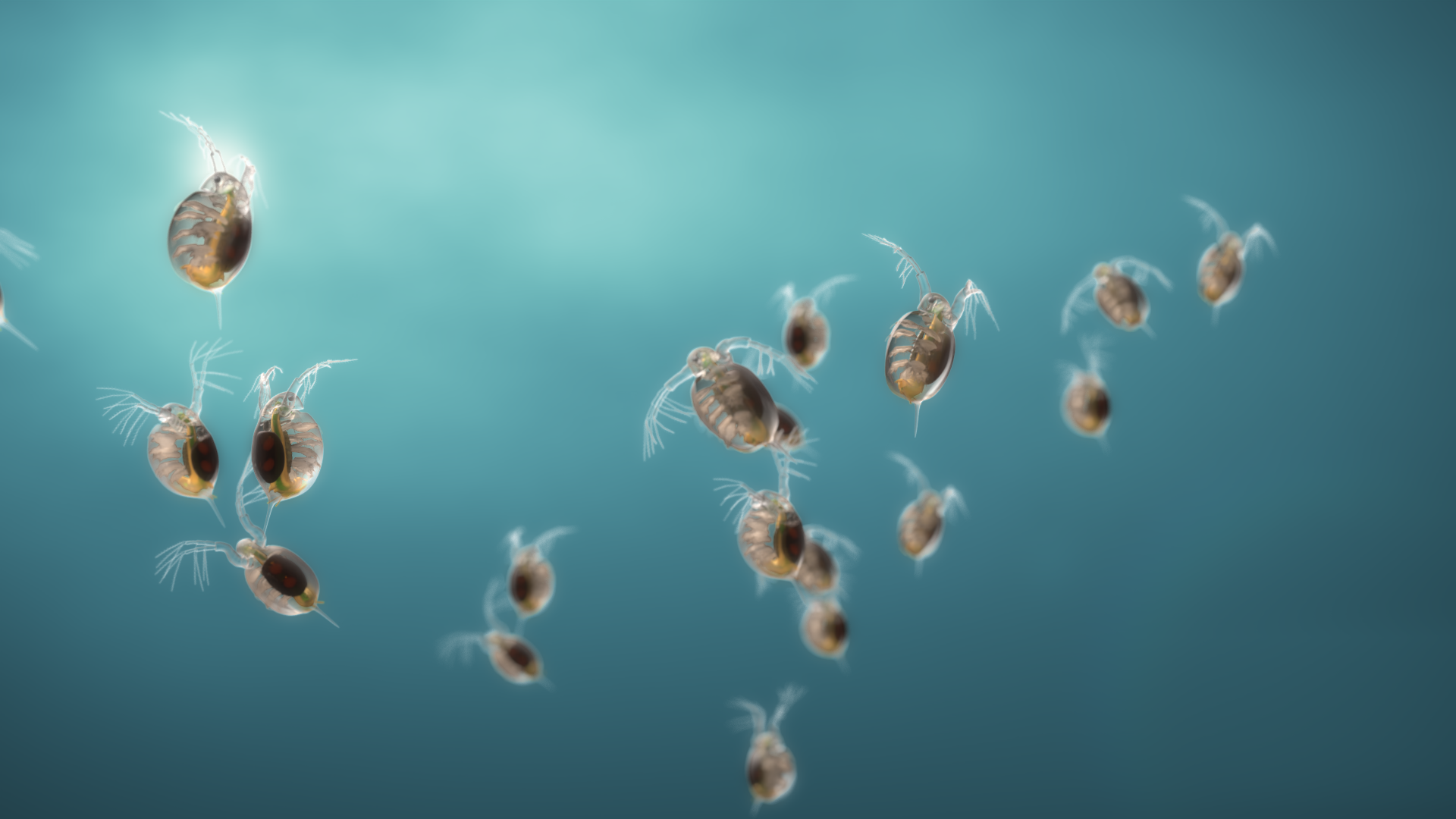
Water fleas also begin to appear. These tiny crustaceans are giants in the world of plankton and are capable of filtering large volumes of water, significantly altering the algal community.
The algae, in turn, may respond with a range of defensive strategies: some form larger colonies, while others grow longer spines.
Summer – A Diversity of Forms and Algal Blooms
As the water warms and becomes rich in light, an extraordinary diversity of forms emerges.
As summer progresses, cyanobacteria – commonly known as blue-green algae – may become increasingly abundant. The rapid growth of their colonies and filaments can lead to an algal bloom.
During these periods, oxygen conditions in the lake may fluctuate dramatically. By day, intense photosynthesis can produce large amounts of oxygen, while at night the respiration of the large algal biomass may cause oxygen levels to fall significantly.
Autumn – Collapse and Renewal
As summer comes to an end, conditions gradually become less favourable for cyanobacteria.
Their viruses, known as cyanophages, may then become active and contribute to the collapse of the algal bloom. Bacteria, flagellates and ciliates take part in breaking down the dying cells.
As light levels and water temperatures fall, many plankton organisms prepare for winter. Resting or dormant stages are formed, while other species begin to reappear.
The cycle comes full circle: beneath the forming ice, the winter plankton community begins to establish itself once again.
How Was the Film Made?
What You See Is Not Microscopic Footage
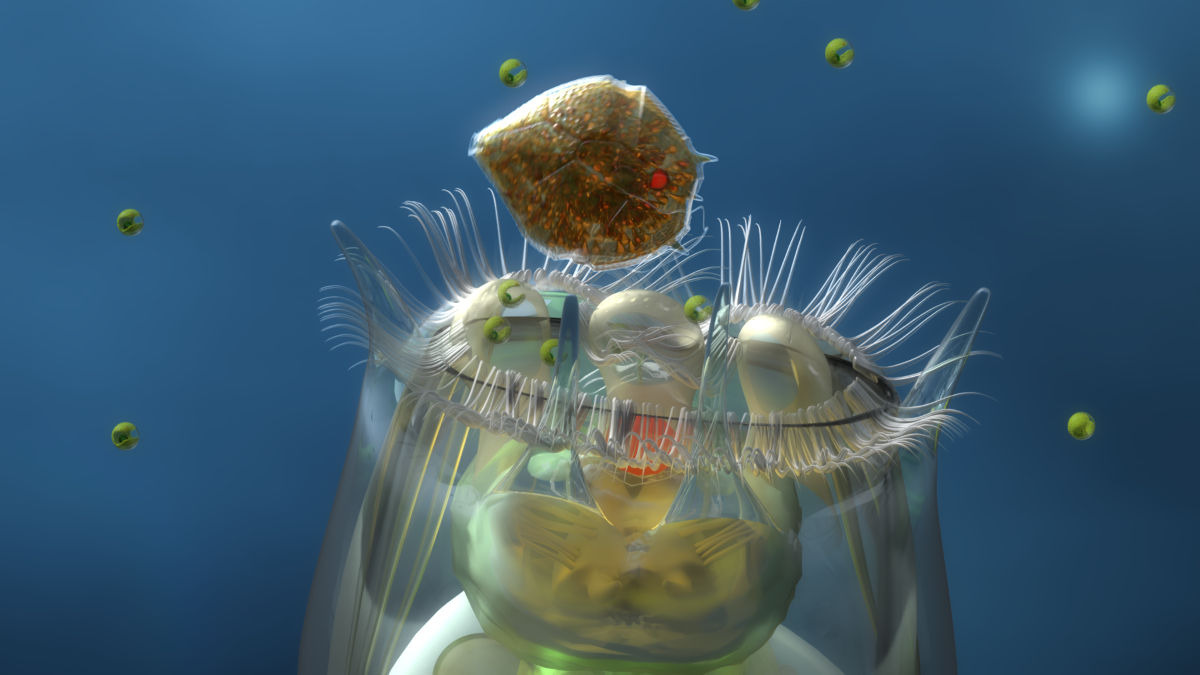
One of the distinctive features of Life in a Drop is that the microscopic world shown in the film is brought to life entirely through computer animation.
The film contains no microscopic footage. The animations were created by Verona Lerf, István Attila Tóth and Tibor Kisantal, members of the Functional Algology Research Group at the Institute of Aquatic Ecology.
The aim was not to create an imaginary fantasy world, but to use scientific knowledge to visualise the world of plankton in a way that allows viewers to experience it up close, in three dimensions and in motion.
Science and visual storytelling come together to reveal a world that surrounds us, yet usually remains invisible.
Why Does Plankton Matter?
The tiny organisms that make up plankton are an important part of the food webs and nutrient cycles of lakes.
Phytoplankton algae use energy from sunlight to produce organic matter. Through photosynthesis, they also play an important role in the lake’s oxygen balance, while serving as food for many members of the zooplankton community. From there, the food web extends to larger aquatic organisms.
Changes in plankton communities are closely connected to factors such as water transparency, oxygen conditions, algal blooms and the living conditions of other organisms in the lake.
The film therefore does more than introduce unusual microscopic organisms: it also reveals how closely connected the visible and invisible worlds of a lake really are.