

A global synthesis of long-term data from 413 river basins shows that nutrient levels have declined in many European rivers, but biological recovery has not always followed. The study, conducted with the participation of researchers from the HUN-REN Centre for Ecological Research, highlights the need to monitor biological change alongside improvements in water chemistry.
Over recent decades, improved wastewater treatment and measures to reduce phosphorus and nitrogen inputs have enhanced water quality in many European rivers. However, declining nutrient concentrations – a process known as oligotrophication – do not necessarily bring river ecosystems back to their previous state.
Published in Ecological Indicators, the study reviewed 118 papers based on time series spanning at least ten years. Together, they covered 413 river basins across six continents. This is the first global synthesis to focus specifically on whether long-term declines in river nutrient levels translate into genuine ecological recovery.
Chemical improvement is not the same as biological recovery
The authors distinguish between oligotrophication and biological recovery. Oligotrophication refers to declining nitrogen and phosphorus concentrations, whereas biological recovery includes changes in algal biomass, community composition, biodiversity and ecosystem functioning.
„Cleaner water does not necessarily mean that a river ecosystem has returned to its previous state. Climate change, altered flow regimes, invasive species and the lasting effects of historical nutrient enrichment can cause river ecosystems to respond differently from what we might expect based on water chemistry alone.”
Nguyễn Vũ Đức Thịnh, first author of the study – attribution to be confirmed
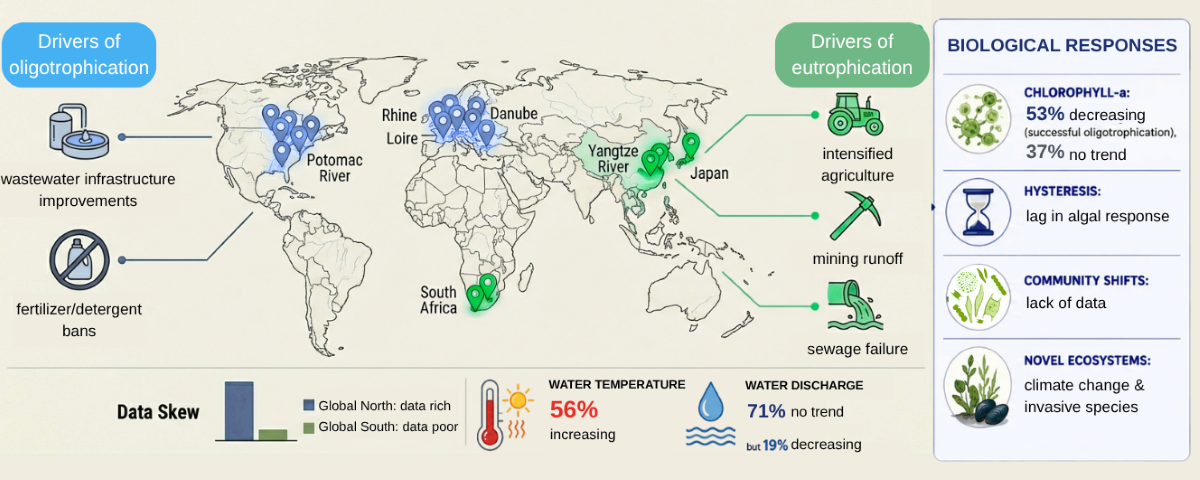
The analysis revealed strong regional contrasts. Declining nutrient levels have been documented most frequently in Western Europe and North America, while eutrophication remains widespread in East Asia and Africa. In North America, recovery often stalls, or chemical and biological trends follow different trajectories.
Reducing nutrient inputs is therefore necessary, but not sufficient, for ecological recovery. Warming, altered discharge, invasive species and nutrients retained from past pollution in catchments and sediments can interact and steer rivers towards new ecological states rather than historical conditions.
The largest knowledge gap is in biological monitoring
Current monitoring programmes document changes in water chemistry much more comprehensively than long-term changes in biodiversity, community structure and ecosystem functioning. Only 17 of the 118 reviewed studies reported long-term biological data at the community level.
The authors therefore call for integrated monitoring that tracks algae, other biological communities and ecosystem functioning alongside nitrogen and phosphorus concentrations. Such data are essential to determine whether improved water quality is accompanied by functional ecological recovery.
Contribution of CER researchers
The first author, Nguyễn Vũ Đức Thịnh, is a member of the MTA–ÖK Lendület Fluvial Ecology Research Group and a PhD student at the Doctoral School of Environmental Sciences of ELTE Eötvös Loránd University. Thịnh and his supervisor and research group leader, András Abonyi, played leading roles in developing the study concept, analysing and visualising the data, and preparing the manuscript. Flórián Tóth contributed to data validation and the scientific review of the manuscript.
Publication: , , , ,
River oligotrophication under global change: A systematic review of long-term nutrient trends and biological responses
doi: https://doi.org/10.1016/j.ecolind.2026.115456
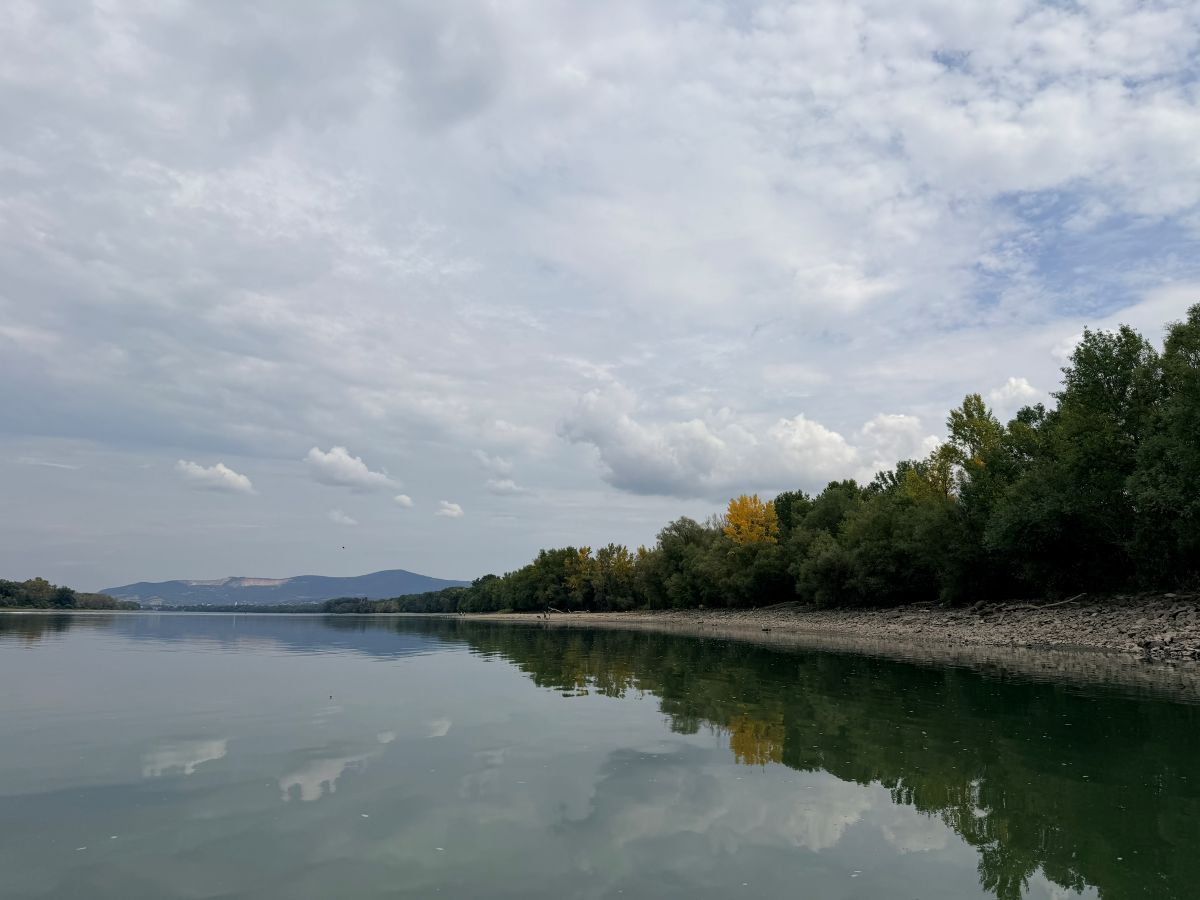
Main photo: Danube in Budapest. photo: Nguyễn Vũ Đức Thịnh