
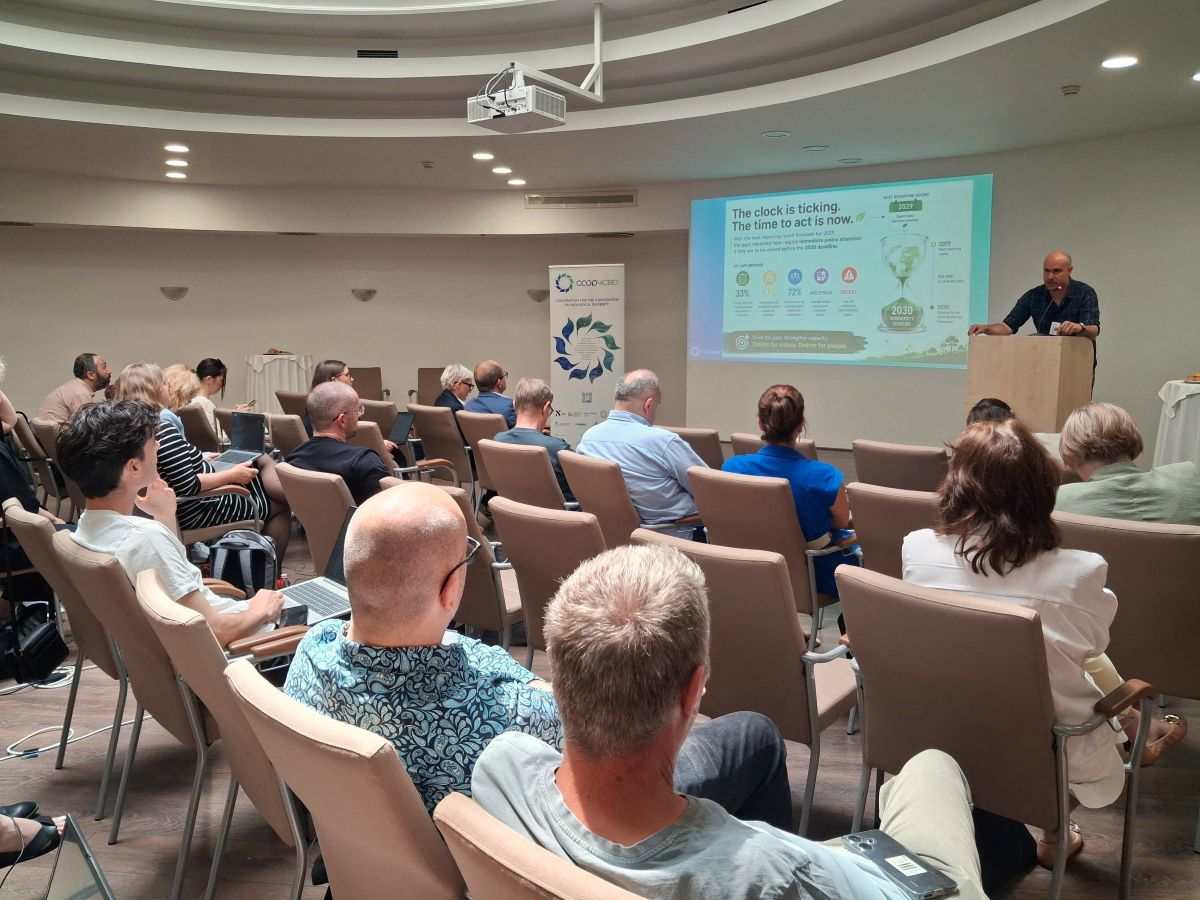
The HUN-REN Centre for Ecological Research organized a regional CO-OP4CBD workshop and networking session in Budapest, in collaboration with the Muséum National d’Histoire Naturelle (France) and the support of the Ministry for the Living Environment. The event, which took place on 8–10 June, brought together 43 participants from 17 countries, including national focal points to the Convention on Biological Diversity (CBD) and biodiversity experts.
The three-day professional meeting aimed to strengthen the participation of Central and Eastern European countries in international processes related to the Convention on Biological Diversity, support regional cooperation among experts, and provide up-to-date information and practical guidance for the effective implementation of biodiversity targets.
The workshop focused on the implementation of the Kunming–Montreal Global Biodiversity Framework. Adopted in 2022, the international agreement sets out four overarching goals and 23 specific targets to be achieved by 2030 in order to halt and reverse biodiversity loss. These targets include expanding protected areas, restoring ecosystems, promoting the sustainable use of natural resources, and securing adequate financial resources for biodiversity conservation.
The event was particularly timely, as a record 125 countries, including Hungary, submitted their 7th National Reports to the Convention on Biological Diversity on time in February 2026. These reports provide an important basis for assessing global progress towards the implementation of biodiversity goals. The first comprehensive evaluation of countries’ collective achievements will take place at the next UN Biodiversity Summit, the 17th Meeting of the Conference of the Parties to the Convention on Biological Diversity (COP17), scheduled for October 2026 in Armenia.
“Coordinated participation in global biodiversity policy processes is essential for achieving biodiversity goals. The three-day event organized by the Centre for Ecological Research provided a platform for cooperation and knowledge exchange among experts from Central and Eastern Europe, while also highlighting the importance of meaningfully involving the custodians of traditional knowledge.”, said Kinga Öllerer, lead organizer of the event and researcher of the HUN-REN Centre for Ecological Research.
The workshop in Budapest was opened by Levente Kőrösi, State Secretary for Biodiversity and Hungary’s national focal point to the Convention on Biological Diversity, and András Báldi, Research Professor at the HUN-REN Centre for Ecological Research and Corresponding Member of the Hungarian Academy of Sciences. The objectives of the programme were presented by Éva Macskásy on behalf of the Centre for Ecological Research.
During the three-day programme, participants attended presentations delivered by representatives of the CBD Secretariat, then they then discussed preparations and priorities for COP17, to be held in Armenia, lessons learned from the 7th National Reports, the role of Subregional Technical and Scientific Cooperation Support Centres (TSCCs), and opportunities for strengthening expert engagement in biodiversity policy processes.
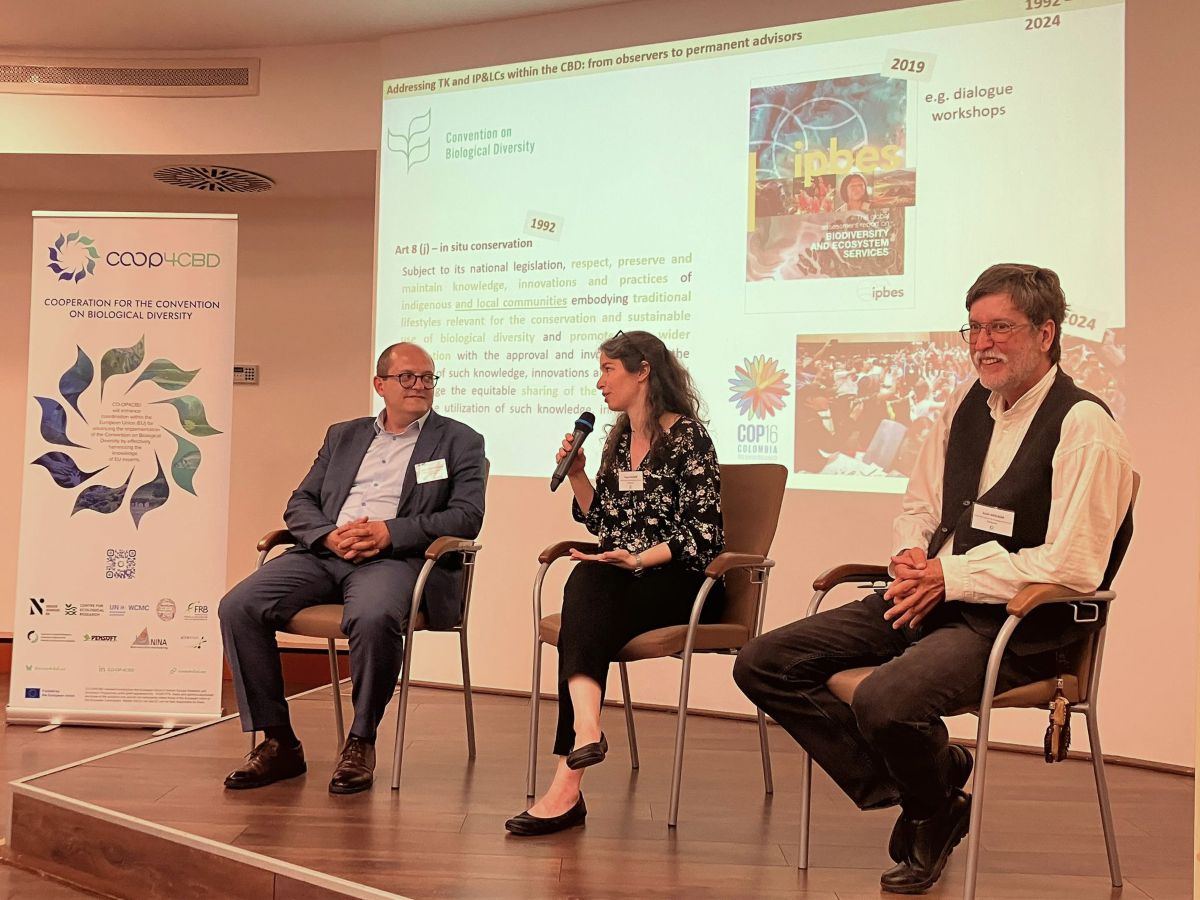
The third day focused on the role of local communities and custodians of traditional ecological knowledge. The discussion followed presentations by HUN-REN Centre for Ecological Research scientists Zsolt Molnár and Kinga Öllerer, highlighting the importance of integrating traditional knowledge into biodiversity conservation and policymaking.
The event was held within the framework of the CO-OP4CBD project, which supports international cooperation related to the implementation of the Convention on Biological Diversity. As a project partner, the HUN-REN Centre for Ecological Research contributes to strengthening the engagement of expert communities across the region in global biodiversity processes and enhancing their participation in international biodiversity policymaking.
Related links: The programme and the presentations of the event
Main photo:
Workshop discussion on the role of traditional ecological knowledge holders. Karen Khachatrian, representative of the Ministry of Environment in Armenia, with Kinga Öllerer and Zsolt Molnár, from the HUN-REN Centre for Ecological Research. Credit: Éva Macskásy